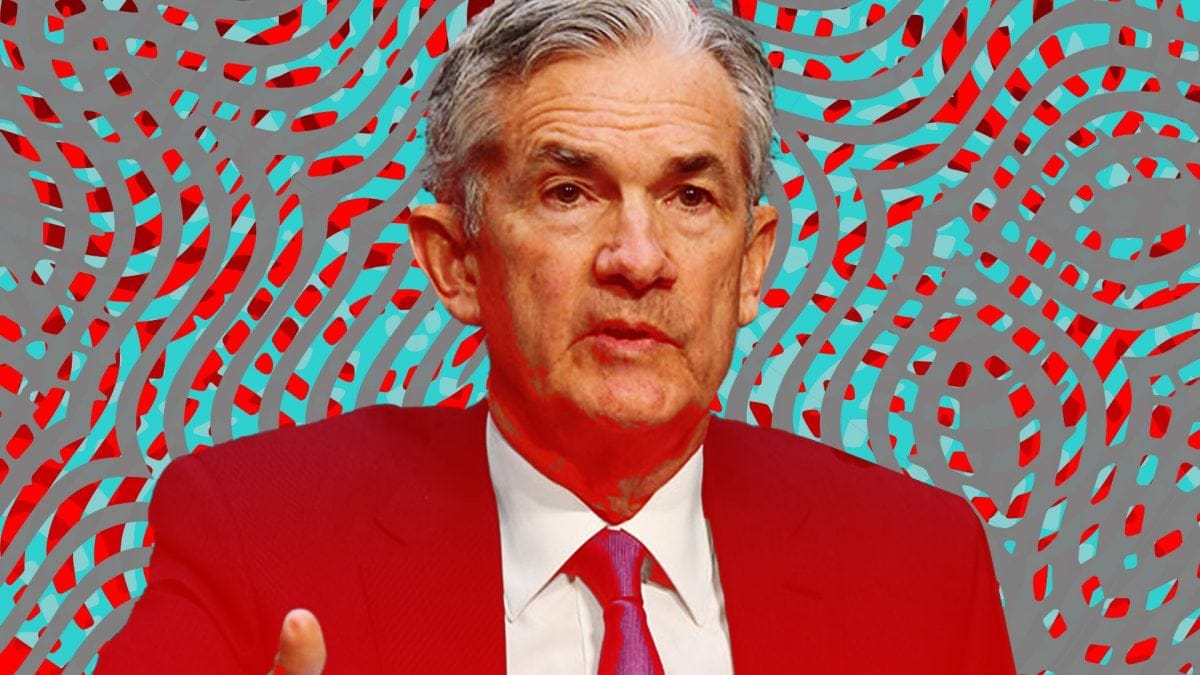
Bitcoin's price retreated after the Federal Reserve held its benchmark interest rate steady at its January 2024 meeting, dashing investor hopes for an early pivot to rate cuts that had buoyed risk assets — including crypto — through the final months of 2023.
The FOMC's decision to maintain rates in the 5.25%–5.50% target range reflected persistent inflation concerns and committee members' reluctance to declare victory prematurely. For Bitcoin and the broader digital asset market, the implications run deeper than a single day's price move: the relationship between Federal Reserve policy and crypto valuations has become one of the most closely watched macro correlations in modern finance.
The mechanism linking interest rate decisions to Bitcoin's price is straightforward but often underappreciated. When the Fed holds rates elevated, the opportunity cost of holding non-yielding assets like Bitcoin increases relative to Treasuries and money market funds offering 5%+ returns. Capital that might otherwise flow into speculative assets stays parked in yield-bearing instruments. Conversely, rate cut expectations reduce that opportunity cost and improve the risk-on appetite that tends to benefit crypto.
The Fed decision came just weeks after the SEC approved the first U.S. spot Bitcoin ETFs in January 2024, a milestone that had driven Bitcoin to reclaim the $40,000 range. The rate hold introduced a counterweight: even with improved institutional access through ETF products, the macroeconomic environment — specifically, the persistence of restrictive monetary policy — remained a meaningful headwind for sustained price appreciation.
"The committee does not expect it will be appropriate to reduce the target range until it has gained greater confidence that inflation is moving sustainably toward 2 percent."
— Federal Reserve Chairman Jerome Powell, post-FOMC press conference
From a U.S. crypto investment perspective, the Fed's hawkish hold underscored the degree to which Bitcoin has been re-priced as a macro asset rather than an uncorrelated store of value. During the 2020–2021 bull run, ultra-low rates and massive fiscal stimulus created the liquidity conditions that drove crypto to all-time highs. The post-2022 environment of tighter monetary conditions reversed that dynamic. Understanding this correlation is now a baseline competency for any serious analysis of crypto market structure.
Analysts noted that Bitcoin's halving — scheduled for April 2024 — represented a supply-side catalyst that could partially offset macroeconomic headwinds. But the consensus view from policy researchers remained that sustained Bitcoin appreciation would require either rate cuts or a fundamental re-rating of Bitcoin's risk profile relative to traditional assets. The January 2024 Fed decision made clear that neither was imminent.
The January 2024 Fed hold demonstrated the degree to which Bitcoin's correlation with traditional macro variables had strengthened since the 2020–2021 bull run. During that earlier period, Bitcoin's price action was largely disconnected from Fed policy — it rose during quantitative easing but also demonstrated independent momentum driven by crypto-native narratives. By January 2024, with institutional investors holding significant ETF positions, Bitcoin's response to Fed communications had become nearly as predictable as bond market reactions to FOMC statements.
This correlation shift has policy implications. Federal Reserve governors and Treasury officials who previously treated crypto as a peripheral concern have increasingly needed to account for digital assets in their financial stability analyses. When a Fed decision can move Bitcoin by 5-10% in a single session, the asset class has become large and interconnected enough to warrant the same macro-level attention as gold, energy prices, or credit spreads. The January 2024 rate hold, trivial in isolation, illustrates why crypto regulators and the Fed must now coordinate their approaches in ways that were unnecessary when crypto markets were smaller and more isolated from traditional finance.
Keywords: Bitcoin price, Federal Reserve, interest rates, FOMC, crypto markets, monetary policy, BTC
Source: legacy